Because we are born in a flexed position, with our focus very much inward, the development of strength, competence, and balance in the SBL is intimately linked with the slow wave of maturity, as we move from this primary flexion into a full and easily maintained extension. -Tom Myers
Warm Ups
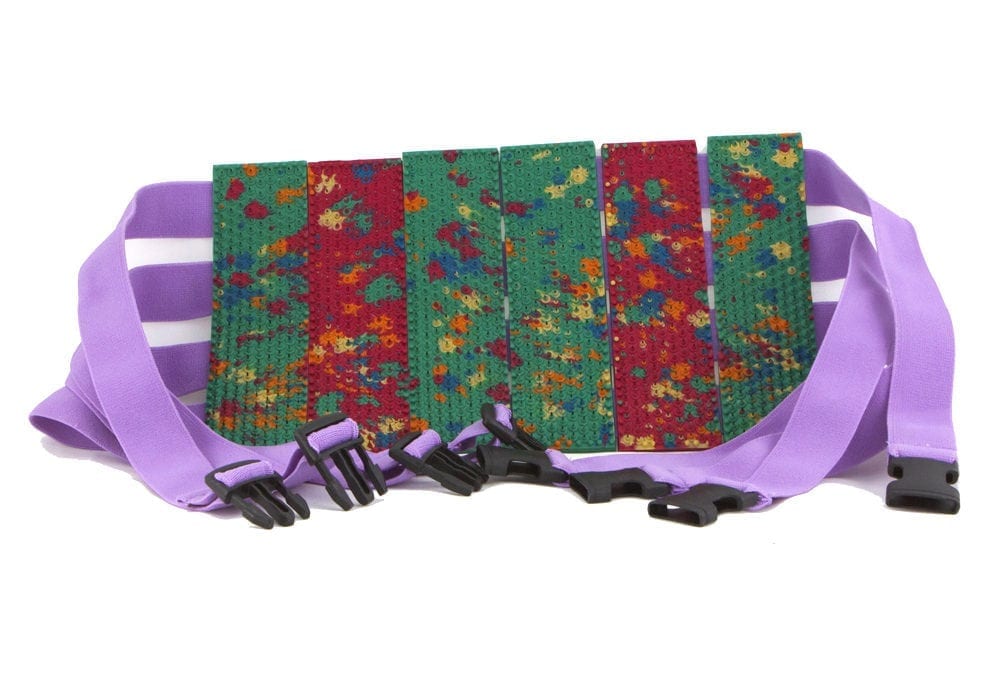
SPIKY MAT
- Body position: Supine.
- What to do with the device: Place a spiky mat on the floor, and recline so that your whole back makes gentle contact with the spikes.
- Action: Relax completely. Stay for at least one minute.
- Breath: Soft, steady inhalations. Soft, steady exhalations.
- Intention: Increase blood flow to the superficial back muscles, particularly latissimus dorsi and trapezius.
FOAM ROLLER WHOLE BACK
- Body position: Supine with flexed knees

- What to do with the device: Place the foam roller across your upper back, perpendicular to your spine.
- Action: Clasp your hands behind your head, and lift your hips. Using your legs for leverage, roll up and down the foam roller from your shoulders to the bottom of your rib cage.
- Breath: Soft, steady inhalations. Soft, steady exhalations.
- Intention: Increase blood flow to the to the rhomboids, middle trapezius, and thoracic paraspinals.

FOAM ROLLER HALF BACK
- Body position: Supine with flexed knees.
- What to do with the device: Place the foam roller inline with your spine.
- Action: Slowly roll so that the foam roller compresses superficial muscles that lie along the right side of the spine. Pause, and then switch sides. Your arms can support you by pressing into the floor at your sides.
- Breath: Soft, steady inhalations. Soft, steady exhalations.
- Intention: Increase blood flow to the thoracic extensors.
FOAM ROLLER LOW BACK
- Body position: Supine with flexed knees.
- What to do with the device: Position the foam roller horizontally along your low back.
- Action: Relax your body, and gently roll up and down the low back.
- Breath: Soft, steady inhalations. Soft, steady exhalations.
- Intention: Increase blood flow to the lumbar extensors.
General Work
INFLATABLE BALL PARASPINAL RELEASE
- Body position: Supine with flexed knees and hands on the floor for support.

- What to do with the device: Place the inflatable ball squarely in the center of your sacrum.
- Action: Pause, and then begin to inch the ball up the center of the spine, in the direction of the head.
- Breath: Relax and breathe over each vertebra.
- Intention: Free the paraspinals.

INFLATABLE BALL QL RELEASE
- Body position: Supine with flexed knees and hands on the floor for support.

- What to do with the device: Place the inflatable ball at the most lateral part of your right iliac crest (you may need to hold it steady with one hand), and pause.
- Action: Start to roll the ball medially towards your spine. Stop just short of the spine, and slowly roll the ball up the right edge of the lumbar and thoracic vertebrae, pausing every half inch to relax and breathe. Next return the ball to the base of the thoracic vertebrae, and begin to take the ball along diagonal paths. For the lower half of the thoracic vertebrae, roll the ball from the right edge of the spine to the bottom of the shoulder blades (inferior angle). For the upper half, roll the ball from the right edge of the spine to the top of the shoulder blades (superior angle). Repeat on the other side.
- Breath: Soft, steady inhalations. Soft, steady exhalations.
- Optional movement: Circumduct one arm at a time.
- Intention: Reduce tension in the paraspinals, quadratus lumborum, and the middle and lower fibers of the trapezius.

Focused work
FIXED-DISTANCE BALLS PARASPINAL RELEASE
- Body position: Supine with flexed knees and hands on the floor for support.

- What to do with the device: Place the fixed-distance balls on either side of the lumbar spine.
- Action: Pause, and then begin to inch the balls up the center of the spine, in the direction of the head.
- Breath: Breathe slowly and softly into areas of increased sensation.
- Intention: Reduce tension in the paraspinals.

SMALL BALL ROTATOR CUFF RELEASE (Wall Version)
- Body position: Stand with your back against a wall.

- What to do with the device: Place the small ball between your spine and shoulder blades and lean into the wall. The ball will be sandwiched between you and the wall.
- Action: Roll from your spine outward to the scapula, pausing to breathe into tight spots.
- Optional movement: Walk your feet out from the wall to increase the amount of pressure.
- Breath: Breathe slowly and softly into areas of increased sensation.
- Intention: Reduce tension in the back of the shoulders, particularly the rhomboids, infraspinatus, supraspinatus, and teres major and teres minor.

SMALL BALL ROTATOR CUFF RELEASE (Supine Version)
- Body position: Supine.

- What to do with the device: Place the small ball between your spine and shoulder blades. The ball will be sandwiched between you and the floor.
- Action: Roll from your spine outward to the scapula, pausing to breathe into tight spots.
- Optional movement: Circumduct one arm at a time. Further increase pressure by lifting your hips.
- Breath: Breathe slowly and softly into areas of increased sensation.
- Intention: Reduce tension in the back of the shoulders, particularly the rhomboids, infraspinatus, supraspinatus, and teres major and teres minor.

Stretches
CAT/COW STRETCH
- Body position: Hands and knees (table top position).

- Action: On an inhalation, drop your belly towards the ground as you extend the chin towards the ceiling. On an exhalation, round the back and drop the head. Let the transitions be fluid.
- Intention: Strengthen and elongate the back muscles.

RECLINED TWIST
- Body position: Supine.

- Action: Draw both knees into your chest. Open your arms to the side like wings and drop the knees to one side. Rest for 30 seconds, and then switch sides.
- Intention: Strengthen and elongate the back muscles.

HALF MOON STRETCH
- Body position: Standing.

- Action: On an inhalation sweep your arms up overhead. On an exhalation, arc your torso to the right, taking your hips to the left. Breathe into the left side of the body. Inhale back to center, and then switch sides.
- Intention: Strengthen and elongate the back muscles.